
Blog
What's the Real Difference Between Managing Tasks and Leading People?
By The Nextwave Leaders
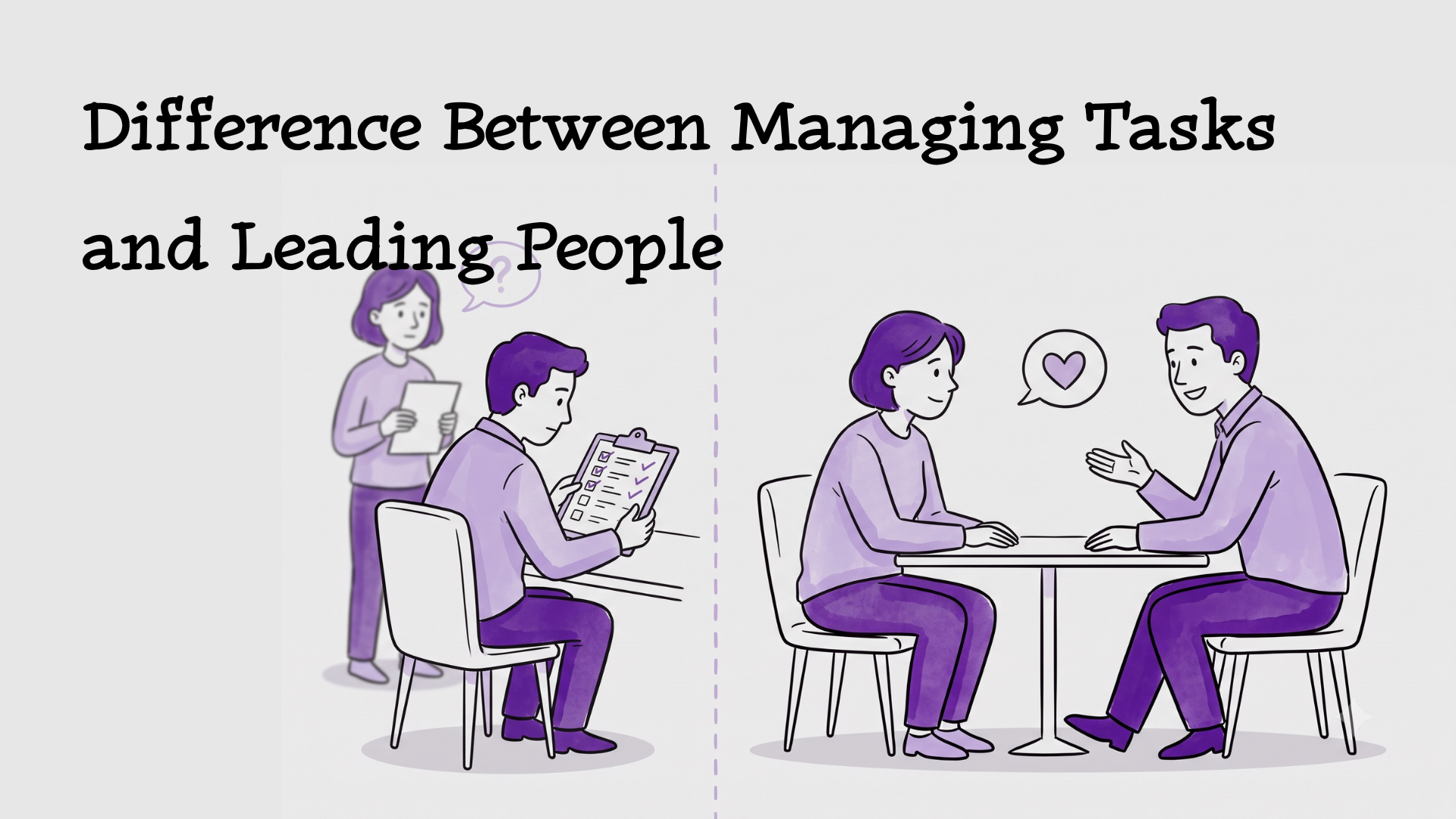
A first-time manager once had me on a call so often that "update" stopped meaning anything. This was during a chaotic stretch, a sudden shift from office to remote work, an unrealistic timeline nobody questioned, and a team quietly falling apart under it: family emergencies, health scares, constant night-to-day shift swaps. Every hour of the day was logged in a tracker. Every task had a status. And still, every ten minutes, there'd be another ping asking for an update.
One weekend, exhausted, I said no. That single refusal caused more disruption than months of overwork had. A senior manager called, surprised that I'd pushed back at all. She said she'd hear our concerns, set up a call to talk it through properly. That call got rescheduled, then rescheduled again, for months. Nothing changed. Eventually, most of the team left, either the company or the role entirely.
That's what pure task management looks like when it has no people leadership underneath it. Everything gets tracked. Nothing gets heard.
Managing tasks keeps things moving. Leading people keeps people.
On a different project, a different manager. When I mentioned my father wasn't doing well, he noticed something was off before I even brought it up fully. "You don't look okay. If there's anything I can help with, come to me." He checked in after I took leave for a family health emergency, after a surgery, on birthdays, during the ordinary weeks too. He wasn't available every single moment. Nobody is. But he made sure he showed up consistently enough that I knew he would.
This is the exact gap that sits at the center of most first-time manager struggles: the shift from tracking activity to actually leading people. It's not about caring more. Most first-time managers do care. It's that nobody taught them what caring looks like in practice, day to day, inside a standup or a one-on-one.
What the shift actually looks like in practice
The daily standup is a good place to see this play out. Most standups are built around two questions: what did you do, and what's blocking you. That's task management. It has its place, but on its own, it treats people like line items.
A few small, repeatable habits change that:
Open with a real check-in, not just a status update.
Ask how the weekend was. Sometimes it's a throwaway question nobody really answers, and that's fine. But say it consistently, and check in properly on the person who was out sick last week, or remember a birthday when you know it. These seconds add up to something people notice.
Praise specifically, and in public.
If someone did something well last week, name it in the meeting. Not vague credit, something specific: "I heard about what you did with that client issue, that was genuinely good work."
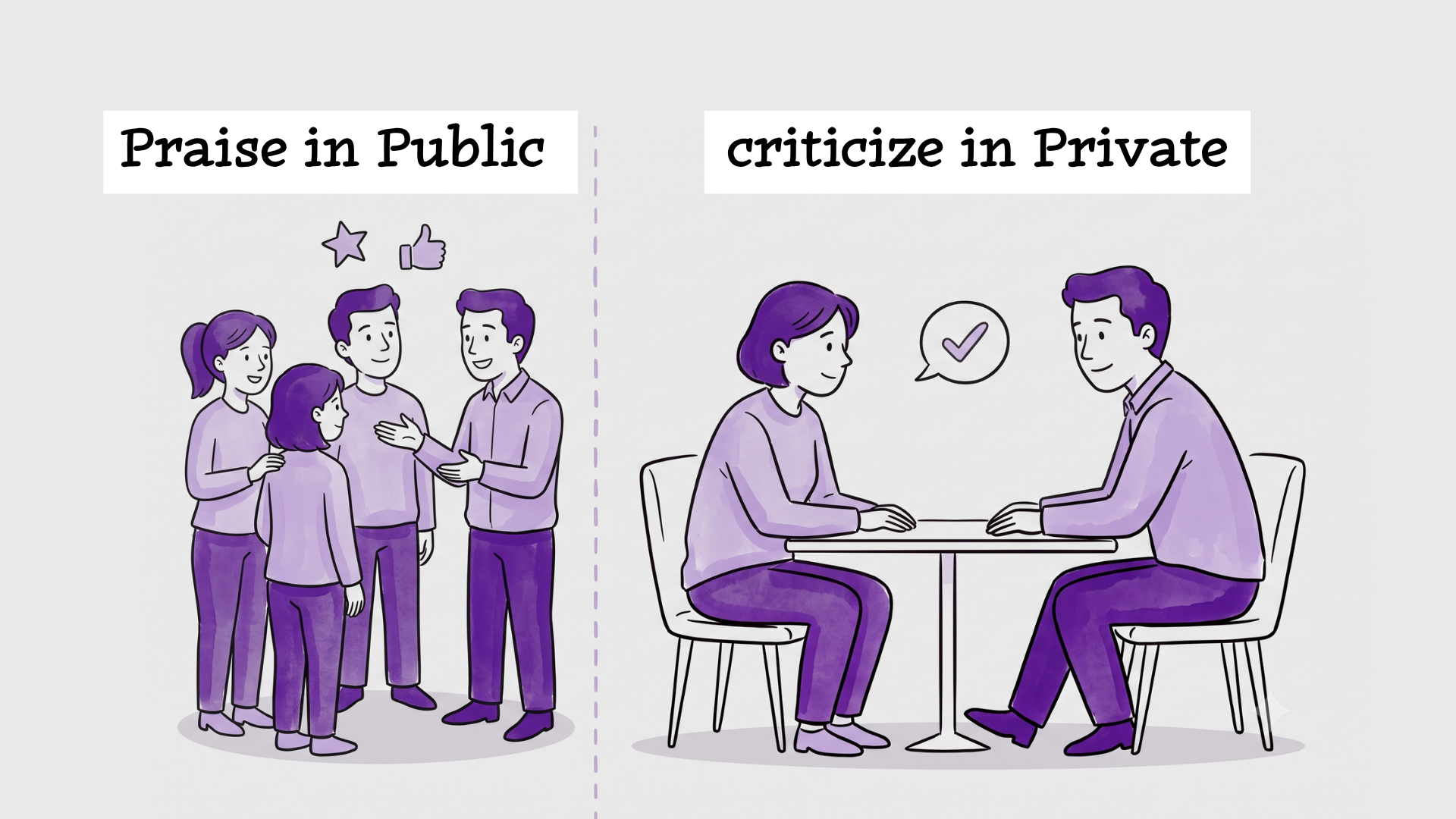
Keep criticism private.
If there's something that needs correcting, don't do it in the group. A quiet "can you stay back for five minutes" and a real one-on-one conversation goes much further than a public note ever will.
Notice what people are actually good at, and build toward it.
Some of the best managers spot when someone's interested in a different role than the one they're placed in, and they build a gradual path toward it, training, stretch opportunities, real trust that the person can grow into it.
Don't shame questions. Route them.
If someone's asking questions, answer them, or if you're stretched thin, pair them with someone senior you trust. Unanswered questions don't disappear, they turn into rework and mistakes later.
Build a system for independence, not dependence.
One supervisor, despite being genuinely busy, made time work by asking her new team members to first try other resources, note down what was still unresolved, and bring a batch of questions to a focused fifteen minutes each day. Over time, that built real independence, and when something truly needed her, there was no hesitation about reaching out.
None of this requires more hours in the day. It requires attention pointed at a different thing: not just what got done, but who's doing it, and whether they're actually okay.
If this sounds familiar
If you're a first-time manager caught in the gap between tracking work and actually leading your team, you're not failing, this is exactly the skill nobody trained you on. Vent Out Wednesday is a free weekly circle built for first-time people leaders working through exactly this, together.
If you're in HR or L&D and this pattern is showing up across a recently promoted batch of managers, task-focused, well-intentioned, but missing the people layer, the Manager Upgrade Sprint starts by diagnosing where your managers actually are before building a plan around it.
FAQs
Managing tasks tracks what got done. Leading people pays attention to who's doing the work, whether they're supported, and whether they're growing. First-time managers often default to task management because it's more visible and measurable, not because they don't care about their team.
Start small: open check-ins with a real question, not just a status update, give public praise for specific work, and move any correction or criticism to a private one-on-one. These habits build trust faster than any policy change.
Encourage them to try other resources first and batch their questions, then give them consistent, focused time daily or weekly to work through what's unresolved. This builds capability without leaving them stuck or unsupported.
Constant tracking without genuine check-ins signals control, not care. Teams that feel surveilled rather than supported tend to disengage or leave, even when workloads and expectations are technically well documented.
Answer them, or pair the person with a trusted senior teammate if time is limited. Unanswered questions don't go away, they show up later as mistakes or rework, which costs more time than answering them upfront.