
Blog
How to Give Feedback That Actually Changes Behavior, Not Just Delivers Criticism
By The Nextwave Leaders
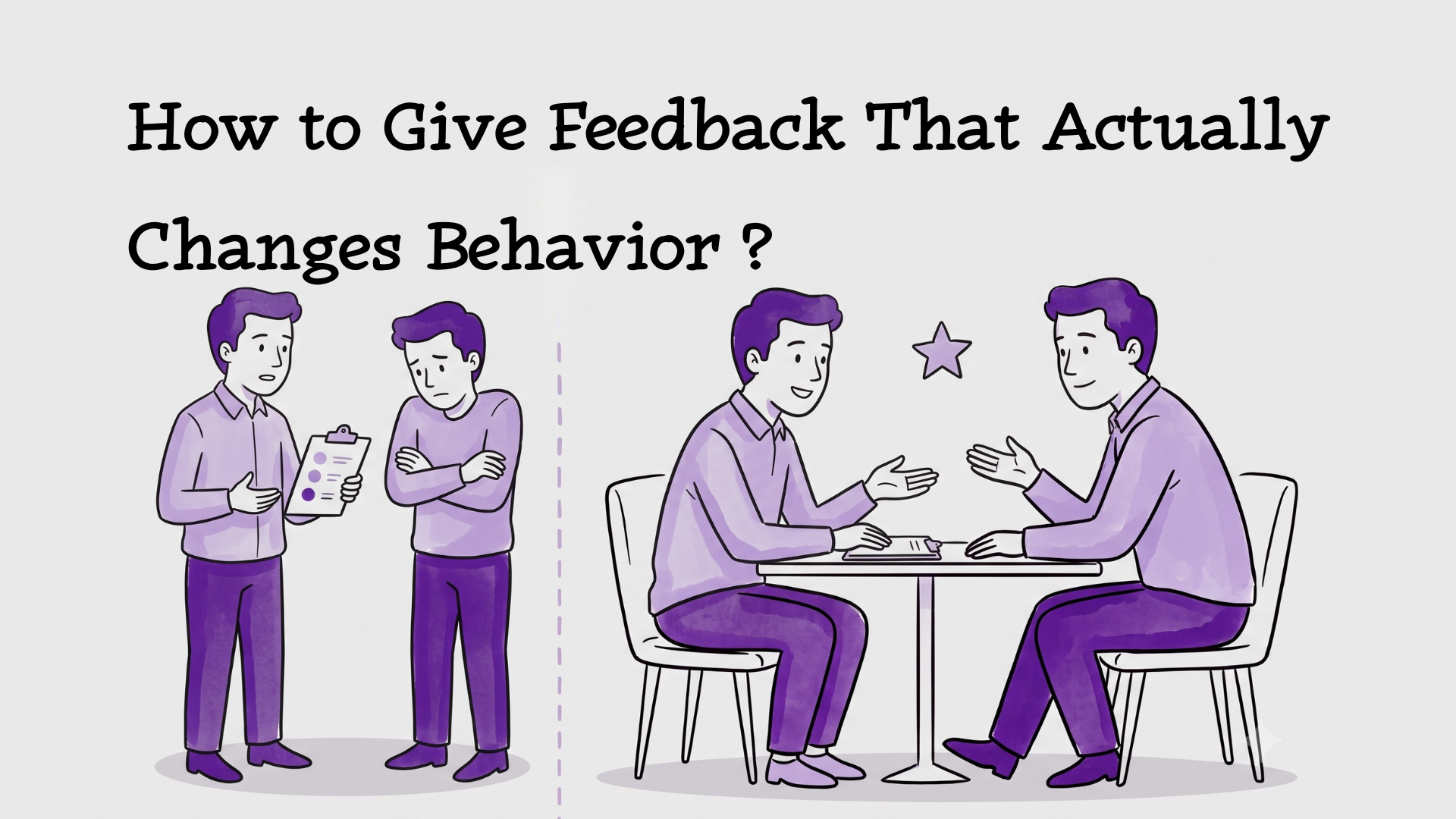
Every month, a supervisor of mine would put off the feedback call for as long as she possibly could. It would slip past the deadline, sometimes past the end of the month entirely, before finally landing on the calendar. And almost every time, right at the end of the call, she'd say some version of the same thing:
"Sorry, I really like your work, there's just something I have to do."
That sentence stuck with me. Why would someone feel sorry for giving feedback? If she genuinely believed the work was good, why did every conversation carry that quiet guilt?
Eventually, I asked a few other team leads what was actually going on. What they told me reframed the entire thing. It wasn't really about growth at all. It was about collecting evidence, documentation in case of a legal issue, an exit, or a promotion case down the line. Feedback had quietly become a paper trail, a checklist of green, yellow, and red, rather than an actual conversation about how someone could get better.
That's the real gap behind most feedback training for managers: it's not that managers don't care. It's that almost nobody has ever taught them how to give feedback that's actually meant to help.
Feedback that lands sounds different
Contrast that with something much smaller, but far more effective. While coaching a manager through a Gen Z communication issue, the advice was simple: stop taking offense at the emojis and casual tone, and instead say plainly, "I'm friendly with you, that's just how I am, but I understand things better through a proper text or a voice note. Send me those instead." No shame, no lecture, just a clear boundary and a clear way forward.
That's the entire difference in one small example. One version of feedback creates guilt and vague discomfort. The other names something specific and gives a person somewhere to go with it.
The SEEN framework
Good feedback isn't a rating. It's a structure, four clear moves, in order, every time.
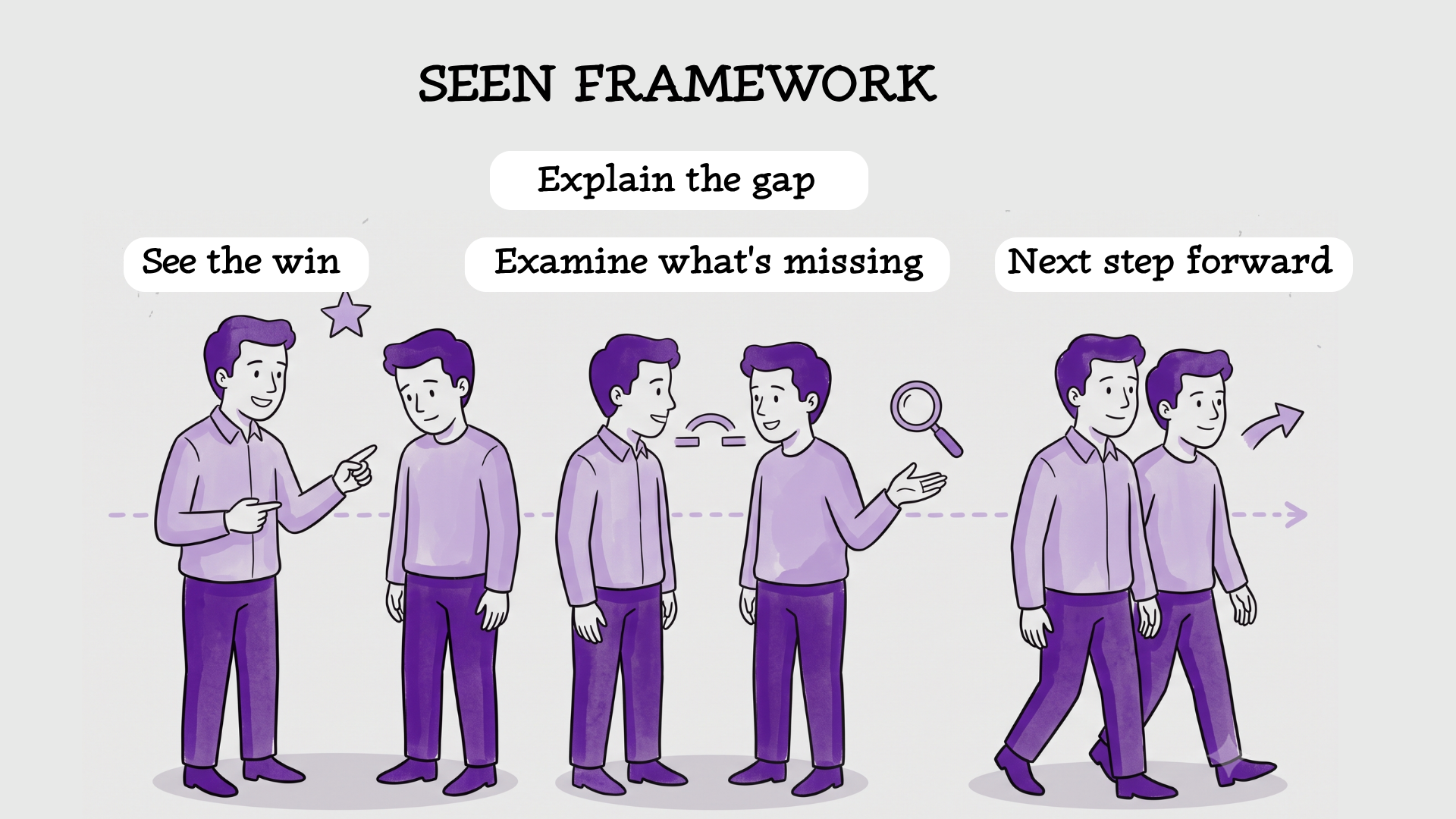
See the win. Start with something real and specific the person did well. Not generic praise, an actual behavior or decision worth naming.
Explain the gap. If something could have gone better, say so directly, but frame it as a gap between what happened and what's possible, not a character flaw.
Examine what's missing. Sometimes the issue isn't poor execution, it's that something was overlooked entirely. Name that clearly too, without treating it as a bigger failure than it is.
Next step forward. This is the part most feedback skips entirely. Don't end on the gap. End on exactly what to do differently next time, concretely enough that the person knows what "better" actually looks like.
The name isn't accidental. Every part of this piece, the Gen Z boundary conversation, the difference between task tracking and people leading, comes back to the same idea: people change behavior when they feel seen, not graded.
Why the checklist approach fails
A green-yellow-red rating system might satisfy a legal or HR requirement, but it teaches a manager nothing about how to actually talk to their team. Worse, it turns feedback into something to get through rather than something to build with. When a manager apologizes before giving feedback, the message the employee receives isn't "I want you to grow." It's "I'm being forced to say this."
Managers don't need a longer form or a more detailed checklist. They need a repeatable structure that takes the same five minutes and actually produces a different conversation. SEEN does that without requiring a manager to be a trained coach or a certified HR professional.
If this sounds familiar
If you're a first-time manager who's realized your own feedback conversations have started to feel more like reporting than mentoring, Vent Out Wednesday is a space built for exactly that, a free weekly circle where managers work through real situations like this together.
If you're in HR or L&D and you're noticing feedback happening only through formal review cycles, or hearing that managers dread giving it as much as employees dread receiving it, that's usually a sign of a skills gap, not a caring gap. The Manager Upgrade Sprint starts by diagnosing exactly where your managers are before building the training around it.
FAQs
Most feedback is structured as a rating rather than a conversation, a checklist of pass or fail rather than specific behavior, real impact, and a clear next step. Without that structure, people receive judgment instead of direction.
SEEN stands for See the win, Explain the gap, Examine what's missing, and Next step forward. It gives managers a repeatable structure for feedback that builds trust instead of triggering defensiveness.
Many managers were never trained to give constructive feedback and default to formal review checklists instead. This turns feedback into a compliance task, which creates guilt and hesitation rather than a genuine growth conversation.
Be specific and direct without shaming their communication style. Set clear boundaries, such as preferring plain text or voice notes over emojis, while explaining why, rather than treating the difference as unprofessional.
Constructive feedback names a specific behavior, its real impact, and a clear next step. A checklist only measures whether expectations were met, without helping the person understand how to improve.