
Blog
How Can Managers Support Their Teams Through AI Anxiety Without Hype or Fear?
By The Nextwave Leaders
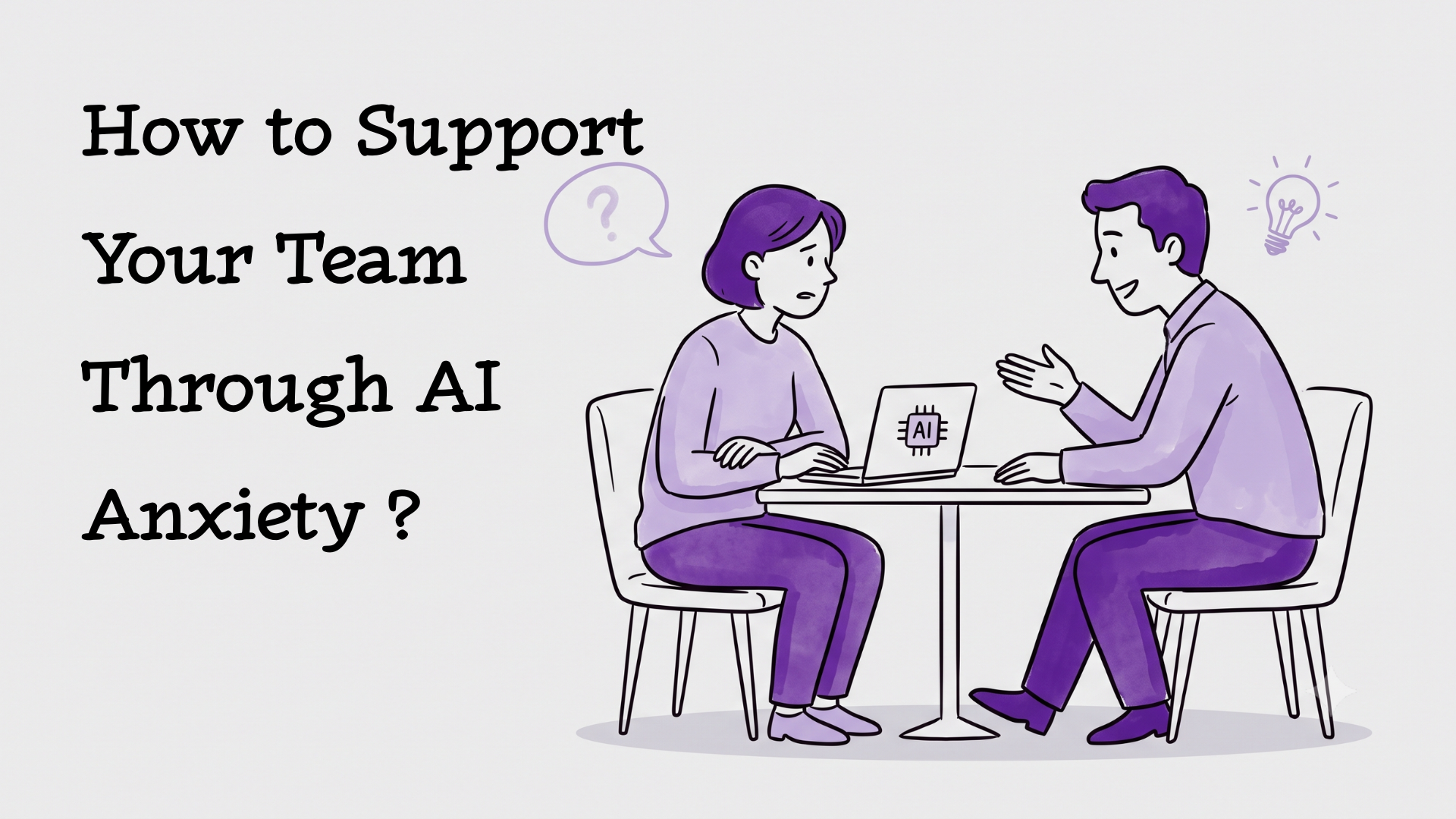
In almost every Vent Out Wednesday session where AI comes up, the same fear surfaces, quietly at first, then more directly once people realize they're not the only one feeling it: "I'm scared I'll be replaced." It comes from individual contributors and, just as often, from the managers trying to lead them through it while feeling exactly the same uncertainty themselves.
This is what real AI readiness for managers looks like right now: not a skills gap, a trust gap.
The pressure is real, and most of it is coming from the wrong place
People are already stretched, nine-hour days, real deadlines, real lives outside work. Add to that a constant stream of new AI tools, new versions, new features, all arriving faster than anyone can reasonably absorb, and it starts to feel less like innovation and more like a race against a machine that never gets tired.
A lot of that pressure isn't coming from AI itself. It's coming from leadership pushing adoption without a clear reason why. "Everyone needs to learn AI" becomes the directive, without anyone stopping to ask: learn it for what, exactly?
One story makes this painfully clear. A manufacturing company reached out for AI productivity training for their team. When asked what outcome they were hoping for, the answer was just "productivity," repeated, with no specifics. The employees weren't in tech roles. Many weren't especially comfortable with computers to begin with. Somewhere along the way, someone had heard that AI increases productivity, and that single word became the entire brief. Trying to force AI into a workflow that has no real use case for it is a bit like fitting a blender into a car and expecting it to go faster. It doesn't matter how impressive the blender is. It was never built for that job.
This is exactly the trap the AI-era adaptability conversation needs to avoid: adoption for the sake of looking modern, instead of adoption tied to an actual problem worth solving.
What good managers do differently
Managers can't remove the uncertainty around AI, because honestly, a lot of it is genuinely still being figured out, even by leadership. But they can change how that uncertainty is carried.
The strongest thing a manager can say right now isn't "here's exactly how this will go." It's: " I don't have all the answers, but I'm ready to figure this out with you. " That single sentence does more to reduce anxiety than any AI training module.
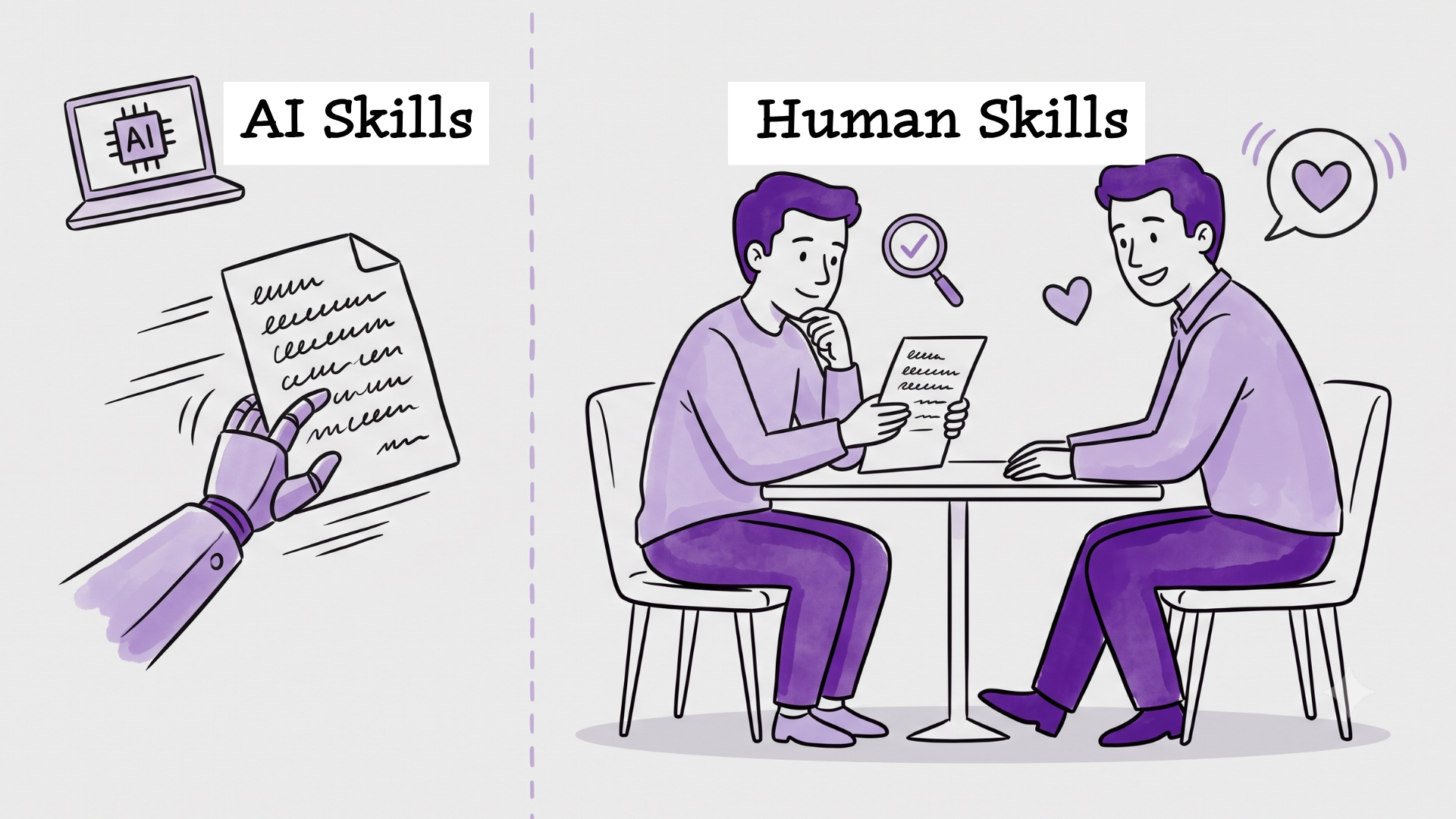
From there, the job is reframing, not overselling. AI isn't there to replace judgment. It's there to remove the repetitive drag: the email drafts, the data pulls, the research that used to eat entire afternoons. The output still needs a human to review it, question it, and decide what actually goes out. That distinction, AI drafts, people decide, is the difference between a tool that supports a team and one that quietly makes them feel disposable.
The real fix for AI anxiety isn't more AI training. It's daily recognition.
Here's the part most companies miss entirely: you don't reduce AI anxiety by explaining AI better. You reduce it by making people feel undeniably valuable for the things AI can't do.
Most feedback cultures are broken in a specific way. Feedback only shows up at review time, and by then it's mostly a list of what went wrong. That builds a defensive relationship with feedback long before AI ever enters the picture.
The fix is small but consistent: managers should be sharing what's going right and what's going wrong, regularly, not just annually. One simple habit makes a real difference. Each day, pick one person on the team and name one specific thing they did well. Not vague praise, something real and observed.
When people feel seen this consistently, something shifts. They stop experiencing AI as a threat and start seeing it as confirmation of what makes them irreplaceable: judgment, empathy, creative problem-solving, catching a client issue before it becomes a crisis, initiative nobody had to ask for. AI can draft a message. It cannot read a room, defuse a tense client call, or notice a teammate is struggling before it shows up in the numbers. That's the human work, and it's the work worth naming out loud, often.
This is what psychological safety training for managers should actually build toward: a team that doesn't need to be threatened into adoption because they already feel too valued to be replaced.
If this sounds familiar
If you're a first-time manager trying to hold this balance for your team while still figuring it out yourself, Vent Out Wednesday is a space built exactly for that, a free weekly circle for first-time people leaders working through this in real time, together.
If you're in HR or L&D and you're watching AI rollout create quiet resistance, confusion, or disengagement across a team, especially after a recent tool rollout or a leadership push for "productivity" with no real use case behind it, that's a signal worth taking seriously. The Manager Upgrade Sprint starts by diagnosing exactly where your managers are before building the training around it, not the other way around.
FAQs
By being honest about what they don't know yet, reframing AI as a tool that removes repetitive work rather than replacing judgment, and consistently recognizing the human skills AI can't replicate, like empathy, problem-solving, and initiative.
No. Forcing adoption without a clear use case creates anxiety and resistance rather than productivity. The right approach starts with identifying a specific problem AI can solve, not adopting a tool because it's trending.
Start with a clear use case, not a mandate. Show employees specifically which repetitive tasks AI will take off their plate, and be transparent that final decisions and review still rest with them.
When employees regularly hear specific, genuine feedback about what they're doing well, they feel valued for their human strengths. That sense of being seen reduces the fear that a tool could quietly replace them.
Judgment, empathy, creative problem-solving, and the ability to notice and address issues before they escalate. These are the human capabilities managers should actively recognize and reinforce.