Blog
What Changes When a First-Time Manager Leads Gen Z and Hybrid Teams?
By The Nextwave Leaders
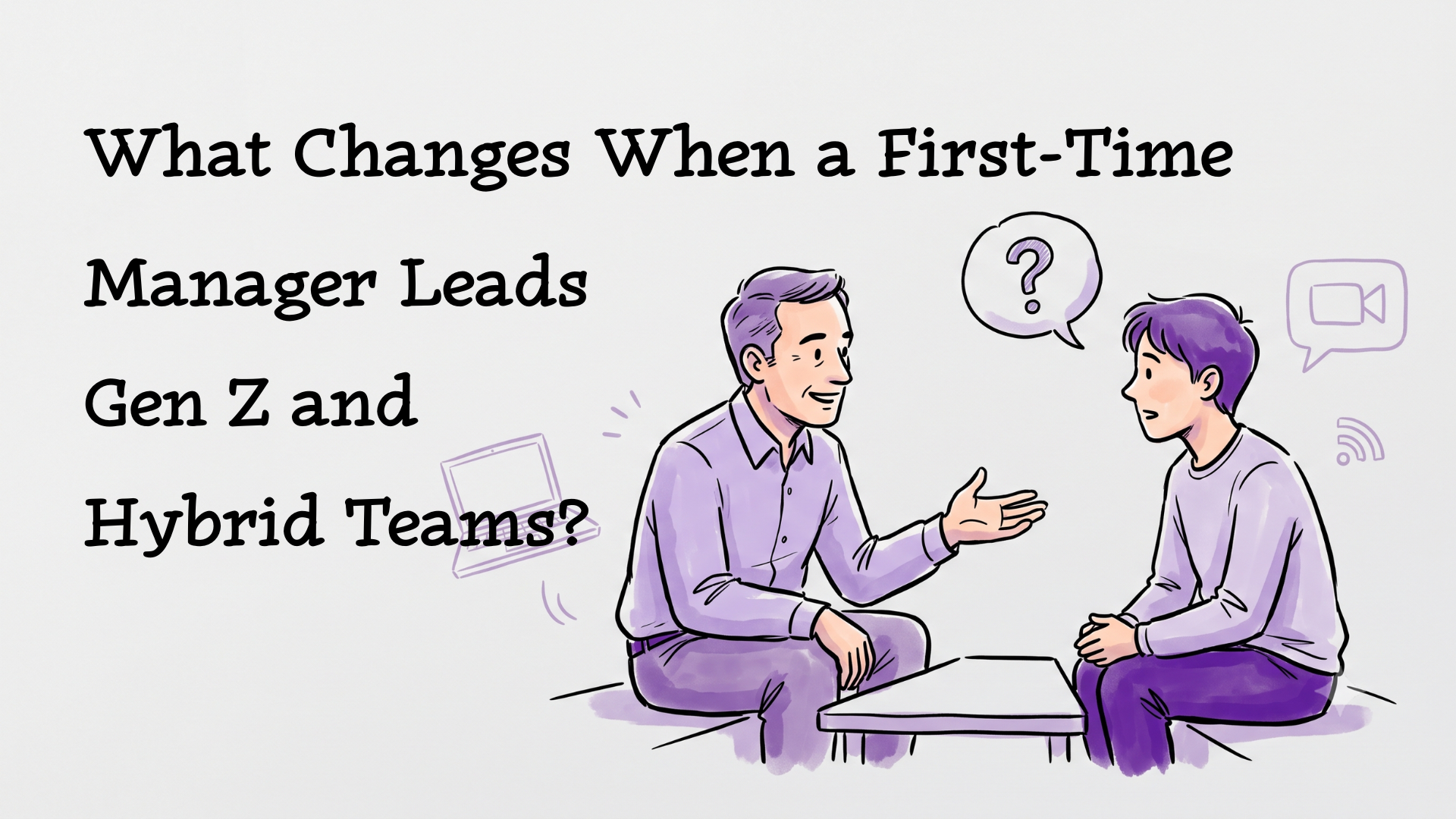
A few years ago, at a networking event, I introduced myself as a Gen Z trainer. The leadership trainers around me lit up, not because they wanted to understand Gen Z, but because they wanted to know how to control them. That single reaction says more about the current state of first-time manager training than any survey could.
The truth is, this generation isn't harder to manage. They're more vocal. They ask more questions. And for a manager who was trained in a very different system, that difference feels like defiance.
It's not an emoji problem. It's a confidence problem.
Most of the conversation around Gen Z at work gets stuck on the surface: the emojis, the memes, the GIFs. But that's not where the real friction is.
Go back one generation. Most of today's managers were taught, implicitly, not to question leadership. You didn't cross-examine your manager's decisions. You followed instructions, kept your head down, and figured the rest out on your own.
Now they're managing a generation that does the opposite. Gen Z asks why. They want context, not just tasks. And here's the uncomfortable part: nobody trained today's managers to handle that. They learned how to manage by watching the managers above them, not by learning how to communicate with the people below them. So when a report pushes back or asks for reasoning, it doesn't register as engagement. It registers as a threat to authority they were never taught to hold differently.
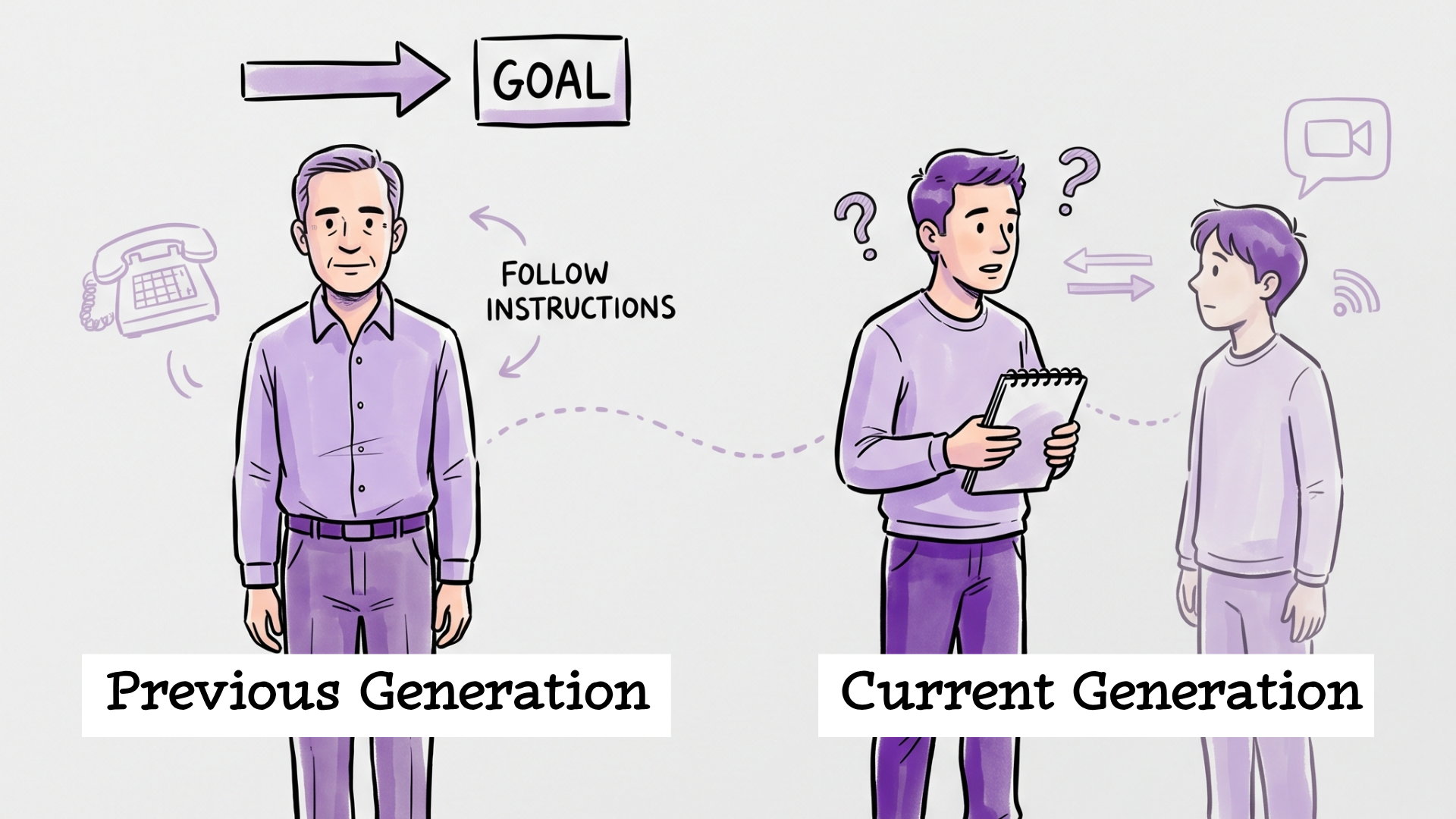
This is the real skills gap. Not a generational personality clash, a communication training gap that's been quietly inherited for years.
Hybrid work didn't just move desks home. It blurred every boundary.
When teams went remote, something genuinely good happened: work became more flexible, more accommodating of real life. But it came with a cost most companies still haven't named. The line between "at work" and "at home" disappeared. Where people once left work at the office, now work follows them everywhere, and there's a quiet expectation that they'll be reachable anytime.
At the same time, a lot of companies have convinced themselves that a Friday online hangout or a quarterly team outing counts as team building. It doesn't, not on its own. Real connection isn't built in relaxed, low-pressure moments. Games and casual chats can create a spark, but they don't build a team that can hold together under real pressure. That takes people who actually feel seen by each other.
Think about the version of connection that used to happen without anyone trying: catching someone's low energy in a breakout room and asking if they're okay. Venting about traffic on a shared commute. Getting stuck together in the rain and ending up in a two-hour conversation about nothing and everything. Some of the longest friendships from a workplace aren't built in planned events. They're built in the in-between moments nobody scheduled.
Here's the shift that's actually happening: the way a lot of managers talk to their employees now sounds a lot like the way they talk to an AI assistant. Give an update. Confirm a task. Move on. The "how are you doing" is missing, and it's not because managers don't care. It's because nobody built that muscle for a remote, always-on world.
What a first-time manager can actually do differently
None of this requires a personality overhaul. It requires attention and a few clear habits.
Notice who's gone quiet. If someone has stopped initiating updates, stopped speaking up in meetings, or stopped reaching out without being prompted, that's a signal, not a personality trait. Pair it with a dip in performance or an unexpected leave, and it's worth a direct, human check-in before it becomes a bigger problem.
Keep difficult conversations off text. Feedback, correction, performance concerns, anything with real stakes, deserves a video or at minimum an audio call. Never a chat message. Never a group setting. Correcting someone publicly, even gently, doesn't build accountability. It builds walls. People stop raising issues with you and start quietly working around you instead.
Set boundaries instead of shaming communication style. If a report leans into emojis, memes, or a casual tone, the instinct might be to call it unprofessional. Don't. Most of that casualness carries over from platforms like WhatsApp, where the same people follow each other socially and the line between "colleague" and "friend" has already blurred. Instead of mocking the style, name the boundary clearly: "I'm friendly with you, that's just how I am, but I don't always follow emoji or meme references well. A plain-worded message or a voice note works better for me." That's a boundary, not a rejection, and it teaches without shaming.
If this sounds familiar
If you're a first-time manager recognizing yourself in any of this, you're not doing it wrong, you were never taught this part. That's exactly what Vent Out Wednesday exists for: a free weekly circle for first-time people leaders to talk through exactly this, with peers who are in it too.
If you're in HR or L&D and this is showing up across a recent batch of newly promoted managers, or it's the pattern quietly sitting behind your last engagement survey's red flags on younger employees, this isn't a one-off training problem. The Manager Upgrade Sprint starts by diagnosing where your managers actually are, then builds the training around that, not a generic leadership deck.
FAQs
They're not harder to manage, they're more vocal. Most first-time managers were trained in hierarchies where questioning leadership wasn't accepted, so when Gen Z employees ask for context or push back, it reads as defiance instead of engagement.
Assuming casual online events like Fun Fridays build real team cohesion. Genuine trust and connection are built in small, consistent, human moments, not scheduled fun.
Privately, and never over chat. Video or audio calls preserve tone and reduce the chance of the feedback being read as public shaming, which damages trust fast.
Not primarily. Those moments can spark connection, but real team resilience is built through consistent, low-key check-ins and shared experience, especially under pressure, not through planned entertainment.
Noticing who's gone quiet. A drop in initiative, updates, or participation is often the earliest signal something needs attention, well before it shows up in performance numbers.